
Tulsi, also known as Holy Basil, is a sacred and medicinal plant found in many Indian households. While Tulsi grows well in warm weather, winter can be challenging if proper care is not taken. Cold temperatures, low sunlight, and improper watering may slow its growth and cause yellowing or drooping leaves. With the right care routine, your Tulsi plant can stay healthy even during the winter months.
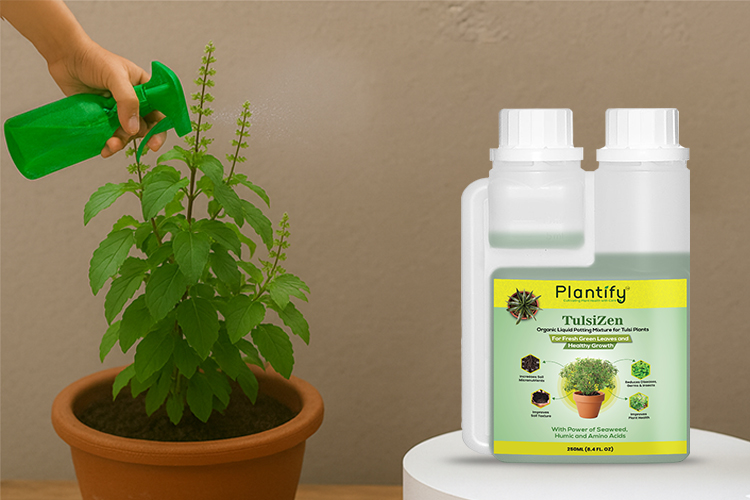
One of the most important aspects of winter care is using the best soil and organic fertilizer for Tulsi plant. Tulsi prefers loose, well-draining soil that allows air circulation around the roots. Heavy or waterlogged soil during winter can damage the roots and reduce plant strength. Adding an organic liquid potting mixture specially formulated for Tulsi helps maintain soil health and supports steady growth.
During winter, place the Tulsi plant where it receives bright sunlight for at least 4–5 hours daily. Morning sunlight is ideal. Avoid placing the plant in areas exposed to cold winds or frost, as Tulsi is sensitive to low temperatures.
Watering should be reduced in winter. Always check the soil moisture before watering and avoid overwatering, as excess moisture can lead to root problems. Feeding the plant every 15–20 days with the best soil and organic fertilizer for Tulsi plant provides essential nutrients, improves root strength, and supports leaf freshness without stressing the plant.
Protecting Tulsi from extreme cold, maintaining balanced watering, and using organic nourishment ensures that the plant remains green, healthy, and vibrant throughout winter.